

History
A French city… and a fairly recent one!
It’s often forgotten, but Nice has only been French since 1860. Before that, it belonged to the Kingdom of Piedmont-Sardinia. Local culture is therefore deeply steeped in Italian history. It was the Treaty of Turin that sealed Nice’s annexation to France, approved by an overwhelming majority in a vote of the local population (the plebiscite), although historians still debate how tightly controlled that vote actually was.
Toponymy
Why the « Promenade des Anglais »?
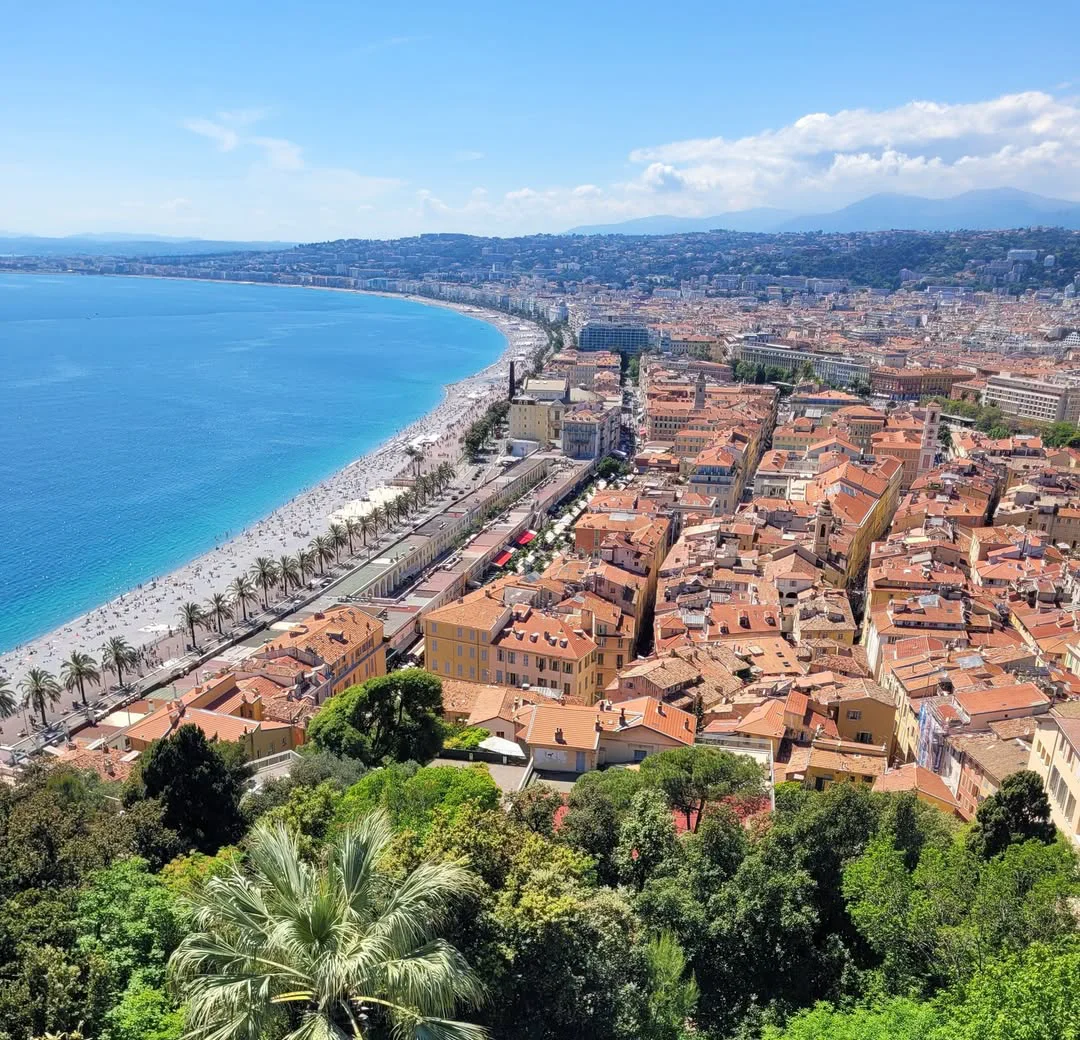
In the 19th century, Nice was the favourite winter destination of the British aristocracy, drawn by the mild climate. During a particularly harsh winter in 1820, large numbers of beggars flocked to the city.
The English reverend Lewis Way decided to fund a project to give them work: building a two-metre-wide dirt path along the seafront. Locals naturally took to calling it lo camin deis Anglés (the English path), which became the world-famous avenue we know today.
Urban legend
The Apollo statue’s false secret
On place Masséna stands the Fontaine du Soleil (Fountain of the Sun), with its immense 7-metre-high marble statue of Apollo. At its unveiling in 1956, its nudity — and above all the size of its anatomy, judged rather too “generous” — shocked a local morality league.
According to local lore, the sculptor Alfred Janniot even agreed to chisel down the Greek god’s attributes. Despite this, the statue was still deemed too provocative and was moved out to the middle of nowhere in the 1970s, before making its triumphant return to the square in 2011.
Tradition
The cannon shot
In Nice, a cannon booms every day at exactly noon — a historical tale linked to Sir Thomas Coventry.
It all began in the 1860s thanks to an English aristocrat with a bit of an obsession for punctuality: Sir Thomas Coventry. Sir Thomas liked to have lunch at a fixed time. The trouble was that his wife tended to prolong her morning walks along the Baie des Anges to chat, completely forgetting the time. Tired of waiting for his lunch, the lord put a rather mad idea to the mayor of Nice: he would fund a cannon shot himself, fired from Castle Hill at exactly noon, to remind his wife it was time to come home. A few years later, the lord returned to England, taking his cannon with him. But the people of Nice had grown so used to this time marker that they demanded its return. In 1885, the town council made the tradition official by municipal decree.
Today, it’s no longer a real artillery cannon, but a large firework (a type of aerial banger known as a “marron d’air”) that’s set off from Castle Hill. A city employee is responsible for triggering the explosion at exactly noon. April 1st is the only day of the year when the tradition changes: for April Fools’ Day, the shot is traditionally fired at 11am instead of noon, just to send the whole city into a panic and make the people of Nice think they’re late for lunch!